
0 %
StageEvolv

Road Shows & Mall Activations

Road Shows & Mall Activations

Overview

Road shows and mall activations bring a brand directly into high footfall public spaces, demanding mobile staging and engagement design built for crowds that did not come specifically to see the brand. Stage Evolv Exp builds activations designed to capture that passing attention. 

Description

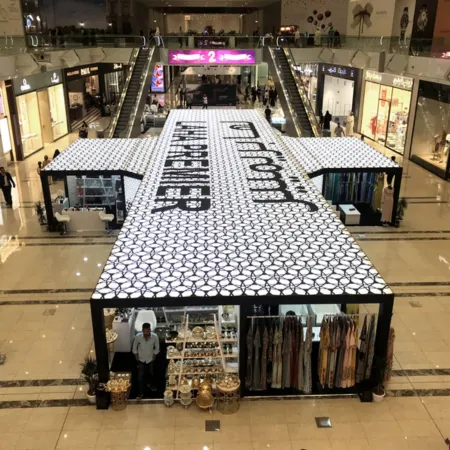
Road shows and mall activations operate on a different premise than ticketed or invited events. The audience did not come specifically for the brand, they are shoppers, commuters, or mall visitors going about their day, and the activation has to earn their attention within seconds. Stage Evolv Exp designs road show and mall activation experiences built around this reality, prioritizing visual impact and immediate engagement over slower paced experiences that work at dedicated events. For major announcements, this setting provides an energetic backdrop for a high impact Product Launch that instantly captures public interest.

Mobile staging and structure design for road shows needs to be transportable and quick to assemble, since road shows typically move across multiple cities or multiple locations within a city over a tour schedule. We design branded mobile units, stages, and activation structures that can be set up, run, and broken down efficiently at each stop while still delivering the visual scale and quality the brand wants associated with the campaign. This expertise in rapid deployment makes us a preferred partner for executing surprise, high energy Guerrilla Marketing Campaigns in major urban centers.

Mall activation design works within a different set of constraints, namely fixed mall layouts, footfall patterns specific to each property, and mall management guidelines around structure size, noise levels, and activation duration. We work within these property specific rules while still designing activation zones that stand out within a busy mall environment and draw shoppers in rather than blending into the background. Our specialized approach to Stall Design & Fabrications ensures that every pop up structure is both compliant with venue rules and visually arresting.

Engagement strategy for both formats centers on converting passive footfall into active participation quickly. We design interactive elements, contests, games, photo opportunities, or experiential setups that give passersby an immediate, low commitment reason to stop, since road show and mall audiences will not invest in a long, complex activation when they are mid errand or moving through a mall with other plans. This environment is highly effective for driving hands on Product Sampling & Demonstration sessions, allowing consumers to experience a product's value firsthand.

Crowd management at high footfall activations is a practical operational concern, particularly for road shows that draw larger crowds in public spaces. We plan activation zone boundaries, queue management for contests or sampling, and basic safety considerations so that a successful, well attended activation does not turn into a crowd control problem. Managing large crowds is especially vital during high profile experiential rollouts, such as major Automobile Launch Events where vehicles are unveiled directly to the public.

Multi city tour coordination, common for road shows that travel through a planned circuit of locations, requires centralized logistics planning combined with local execution teams at each stop. Stage Evolv Exp manages this tour logistics layer alongside the creative activation design, ensuring brand consistency and execution quality hold steady whether the road show is in its first city or its fifteenth stop on the circuit.

FAQs

To prepare an accurate proposal, businesses should provide campaign objectives, preferred locations, estimated audience size, event dates, promotional requirements, branding guidelines, product details, campaign duration, budget expectations, and any special technical or operational requirements. This information enables the event management team to recommend the most suitable execution strategy and cost estimate.
Safety is maintained through venue risk assessments, structural inspections, crowd management planning, trained manpower, emergency response procedures, electrical safety checks, fire safety compliance, and coordination with venue authorities. Following established safety protocols helps protect visitors, staff, and event infrastructure throughout the campaign.
Experiential marketing is widely used across industries including FMCG, retail, automotive, consumer electronics, healthcare, education, telecommunications, banking, fashion, food and beverage, real estate, and lifestyle brands. Businesses that rely on direct customer interaction often achieve stronger brand recall through well-executed activation campaigns.
Customer engagement improves through interactive product demonstrations, gamification, contests, digital experiences, live entertainment, giveaways, QR code registrations, influencer participation, and social media integration. Combining multiple engagement techniques encourages visitors to interact with the brand and improves overall campaign performance.
An outdoor activation may require custom stalls, branded kiosks, stage setups, LED displays, sound systems, lighting, promotional counters, product display units, power backup, barricading, branding materials, and trained event staff. The exact infrastructure depends on campaign goals, venue conditions, and expected visitor footfall.
Yes. Every campaign can be tailored according to regional preferences, customer demographics, local language, cultural considerations, and brand objectives. Customizing creative concepts, promotional activities, and audience engagement strategies helps improve campaign effectiveness across different markets.
Promotional campaigns conducted in malls, commercial spaces, or public venues often require approvals from property management, local authorities, security teams, and venue operators. Professional event management companies coordinate these permissions in advance to avoid operational delays and ensure all activities comply with venue regulations.
The planning timeline depends on the campaign size, venue approvals, fabrication requirements, branding elements, and logistics. Small promotional activities may require one to two weeks, while larger multi-city campaigns often need several weeks of preparation to ensure seamless execution and regulatory compliance.
Before launching an experiential marketing campaign, businesses should define campaign objectives, identify their target audience, choose suitable locations, determine the campaign duration, allocate budgets, obtain necessary permissions, and plan staffing requirements. Careful planning ensures smooth execution while maximizing audience engagement and brand visibility.
The success of an on-ground activation is measured using predefined KPIs such as footfall, audience engagement, lead generation, product demonstrations, sales conversions, social media interactions, and customer feedback. A professional event agency also provides detailed post-event reports with campaign insights, helping brands evaluate ROI and optimize future marketing activities.

Inquire

Find Your Next Project Here