
0 %
StageEvolv

Destination Wedding

Destination Wedding

Overview

Destination weddings combine the emotional weight of a wedding with the logistical complexity of producing a multi day event in an unfamiliar location. Stage Evolv Exp manages both, from initial  Venue Selection & Decoration through guest logistics across the wedding's full duration. 

Description

A destination wedding asks a production team to solve two problems at once deliver the wedding the couple has been imagining, and do it in a location where the couple, and often the planning team, do not have the local familiarity that makes event execution easier closer to home. Stage Evolv Exp has built destination wedding production experience specifically around managing this combination, treating the location's logistics as seriously as the celebration's design.

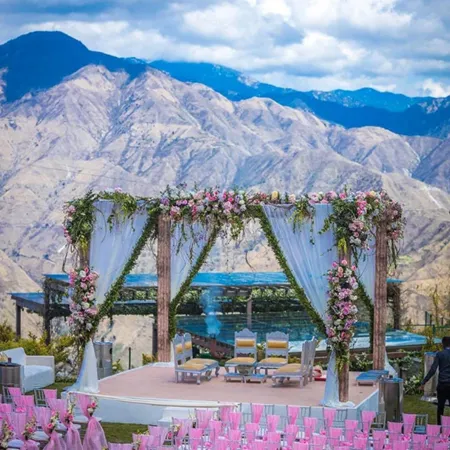
Venue assessment and staging design for destination weddings starts with understanding what the specific location allows and requires. Beach venues, resort properties, and unique Tourism & Heritage Events each come with different structural, weather, and access considerations, and we design stage, mandap, and decor builds that work with the venue's specific conditions rather than forcing a standard template onto a location it was not designed for.

Multi day event flow is standard for most destination weddings, which typically include several distinct functions a welcome event, sangeet or pre wedding celebrations, the main ceremony, and a reception often across consecutive days at the same destination. We design and build staging, decor, and lighting for each function with its own distinct visual identity, while coordinating with partner Catering Services and internal teams to maintain an overall design language that ties the full wedding weekend together.

Guest logistics at a destination wedding extend well beyond the venue itself. Many guests are traveling specifically for the wedding, often staying at the same resort or nearby properties, and we manage comprehensive Logistics & Guest Management  to seamlessly coordinate movement between accommodation and event venues, handle transport for multi location weddings, and organize welcome arrangements that set the right tone from the moment guests arrive at the destination.

Vendor and equipment logistics for remote or destination locations require advance planning that in city weddings rarely need. We plan the transport of decor materials, staging equipment, and production infrastructure well ahead of the wedding date, ensuring everything is perfectly timed alongside the scheduling for Entertainment & Photography teams, accounting for realistic timelines in locations that may have limited local vendor infrastructure.

Weather contingency planning, particularly for outdoor destination weddings, is built into our production approach from the start, with backup staging and covered options planned alongside the primary outdoor setup. Stage Evolv Exp has produced destination weddings across a range of locations, bringing the structural design capability and logistical experience needed to deliver the wedding a couple envisioned, regardless of how far from home that vision needs to be built.

FAQs

Large wedding celebrations involve complex logistics that require experienced event production teams. Professional production ensures structural safety, efficient crowd movement, reliable electrical systems, high-quality audio-visual execution, timely installations, risk management, and coordinated event operations. This level of planning minimizes disruptions and delivers a memorable experience for both the couple and their guests.
Professional planners prepare detailed production schedules, assign dedicated coordinators, conduct vendor meetings, monitor setup timelines, and supervise every stage of execution. Continuous communication among décor teams, technical crews, caterers, entertainers, photographers, and hospitality staff ensures every ceremony runs according to schedule.
Guests should receive travel schedules, accommodation details, local weather information, dress codes, transportation arrangements, event timelines, emergency contact numbers, and venue directions in advance. Providing a well-organized itinerary improves the guest experience and minimizes confusion during the celebration.
Wedding planners prepare a detailed budget covering venues, décor, production, entertainment, hospitality, catering, photography, and logistics. They prioritize spending based on the couple's preferences, negotiate with vendors, monitor expenses throughout the planning process, and recommend cost-effective alternatives while maintaining premium quality standards.
Absolutely. Every wedding event, including the welcome party, mehendi, haldi, sangeet, ceremony, and reception, can be customized around a chosen theme. Professional planners design décor, stage concepts, lighting, entertainment, floral arrangements, and guest experiences that maintain a consistent visual identity throughout the celebration.
Experienced planners create contingency plans well before the event. These may include weather-resistant structures, covered venues, backup generators, alternative indoor spaces, spare technical equipment, emergency response teams, and dedicated on-site coordinators who can quickly resolve unexpected situations without affecting the celebration.
Comprehensive wedding production typically includes venue planning, stage fabrication, décor execution, lighting design, sound systems, LED screens, entertainment coordination, trussing, power distribution, guest management, logistics, technical support, and on-site event execution. Every element is managed under a unified production plan for seamless coordination.
Yes. Professional wedding planners coordinate guest transportation, hotel reservations, airport transfers, welcome kits, itinerary management, and hospitality services. This ensures guests enjoy a comfortable experience while allowing the couple to focus on celebrating without managing travel-related logistics.
Before choosing a wedding location, couples should consider the climate, accessibility for guests, accommodation options, local regulations, budget, seasonal availability, venue capacity, and nearby attractions. A professional wedding planner also evaluates logistics, transportation, backup plans for weather, and vendor availability to ensure a smooth celebration.
For the best venue availability and vendor selection, it is recommended to begin planning 8 to 12 months before your wedding date. This timeline allows sufficient time for venue booking, guest travel arrangements, legal documentation (if required), décor planning, entertainment, and event logistics. Early planning also helps secure better pricing and avoids last-minute challenges.

Inquire

Find Your Next Project Here