
0 %
StageEvolv

Events Logistics & Coordination

Events Logistics & Coordination

Overview

Every event, regardless of category, depends on logistics working invisibly in the background. Stage Evolv Exp manages the vendor coordination, transport, scheduling, and on ground execution that determines whether an event runs smoothly or visibly struggles.

Description

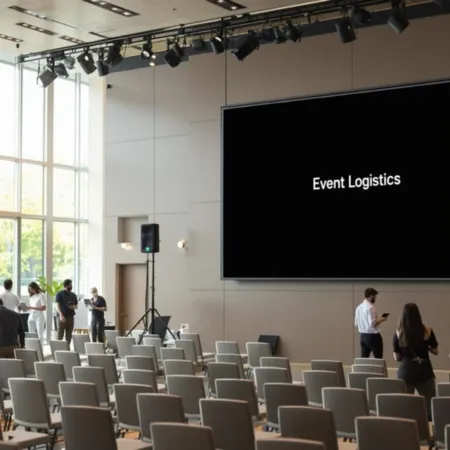
Event logistics is the discipline nobody notices when it works and everybody notices when it fails. A stage that goes up late, catering that arrives at the wrong time, or a vendor who shows up without the equipment they confirmed, all trace back to logistics coordination, not to the creative concept of the event. Whether managing a grand scale Destination Wedding or high profile corporate events, Stage Evolv Exp treats logistics and coordination as a dedicated production discipline, not a background task assumed to handle itself.

Vendor management is often the most complex part of event logistics, since a single event can involve a dozen or more vendors across catering, decor, AV, security, and transport, each with their own schedules and dependencies. We manage vendor coordination as a single integrated timeline, confirming deliverables, managing communication between vendors whose work depends on each other, like decor teams needing the stage structure completed before they can begin styling. This seamless integration ensures perfection in both Venue Selection & Decoration, resolving conflicts before they affect the event day.

Transport and equipment movement, particularly for events that involve large structures, multiple venues, or remote locations, requires detailed planning around vehicle access, loading and unloading windows, and route logistics. We plan this transport layer well ahead of the event date, accounting for realistic timeframes rather than best case assumptions, since equipment arriving late has a cascading effect on every other part of the setup schedule. This rigorous planning is vital for massive setups like B2B & B2C Exhibitions, where timing is everything.

Scheduling and timeline management across the full event lifecycle, from initial setup days before the event through breakdown after it concludes, is something we manage as a master timeline that every vendor and internal team works against, rather than leaving each vendor to manage their own schedule independently and hoping the pieces align on the day. This level of precise scheduling is essential for large scale operations and flawless Tournament Management, where multiple games and teams depend on strict timelines.

On ground execution and real time troubleshooting are where logistics coordination earns its value. Our crews are present throughout the event, managing the inevitable small issues, a delayed vendor, a last minute change in guest count, a weather concern for an outdoor segment, so that organizers and clients are not the ones fielding these problems in real time while also trying to host their event. This dedicated presence is what defines our full scale Logistics & Guest Management services.

Stage Evolv Exp provides event logistics and coordination as a standalone service or as the operational backbone supporting our other production work, recognizing that even the best stage design or decor concept depends entirely on logistics execution to actually come together on the day it matters.

FAQs

Professional logistics planning ensures that every operational aspect of an event runs smoothly, from transportation and equipment delivery to vendor scheduling and on-site coordination. A well-planned logistics strategy minimizes delays, prevents costly mistakes, improves communication between teams, and creates a seamless experience for attendees, exhibitors, and organizers.
Event transportation planning should consider venue accessibility, equipment size and weight, loading dock availability, delivery schedules, parking arrangements, travel routes, local regulations, and contingency plans for traffic or weather disruptions. Proper planning helps ensure timely movement of materials, staff, and guests without operational delays.
Experienced event coordinators create detailed timelines, assign responsibilities, establish communication channels, and monitor vendor activities throughout the event. Regular coordination meetings and real-time updates help ensure decorators, AV teams, fabricators, caterers, security personnel, and technical crews work together efficiently according to the event schedule.
Common challenges include delayed deliveries, equipment failures, weather changes, traffic congestion, last-minute schedule changes, and technical issues. Professional event teams prepare backup equipment, alternate transportation routes, emergency response plans, and dedicated on-site coordinators to quickly resolve unexpected situations with minimal disruption.
The planning timeline depends on the event size and complexity. Corporate meetings may require several weeks of preparation, while exhibitions, trade shows, product launches, and large public events often require planning several months in advance. Early planning allows sufficient time for vendor management, permits, transportation scheduling, venue preparation, and risk assessment.
On-site coordination ensures that every activity follows the planned schedule. Coordinators supervise vendor arrivals, monitor setup progress, manage technical rehearsals, handle attendee flow, resolve operational issues, and maintain communication among all stakeholders. Their presence helps keep the event organized from setup to dismantling.
Operational risks can be reduced by conducting venue inspections, preparing detailed event schedules, maintaining backup equipment, confirming vendor timelines, implementing safety protocols, securing necessary permissions, and assigning experienced coordinators to oversee every stage of execution. Proactive planning significantly lowers the chances of disruptions.
Professional event coordination supports a wide range of industries, including corporate organizations, manufacturing companies, automobile brands, healthcare, education, technology, real estate, government institutions, retail businesses, hospitality, entertainment, and exhibition organizers. Every industry benefits from streamlined planning, efficient resource management, and smooth event execution.
Successful events rely on structured communication through centralized planning documents, shared schedules, vendor briefing sessions, dedicated team leaders, radio communication, messaging platforms, and real-time reporting. Clear communication ensures everyone remains informed about timelines, responsibilities, and any operational changes during the event.
Businesses should choose a logistics partner with proven experience managing events of similar scale, strong vendor networks, skilled project managers, transparent planning processes, safety compliance, contingency planning capabilities, and the ability to coordinate transportation, fabrication, technical production, and on-site execution under a single project management framework.

Inquire

Find Your Next Project Here